

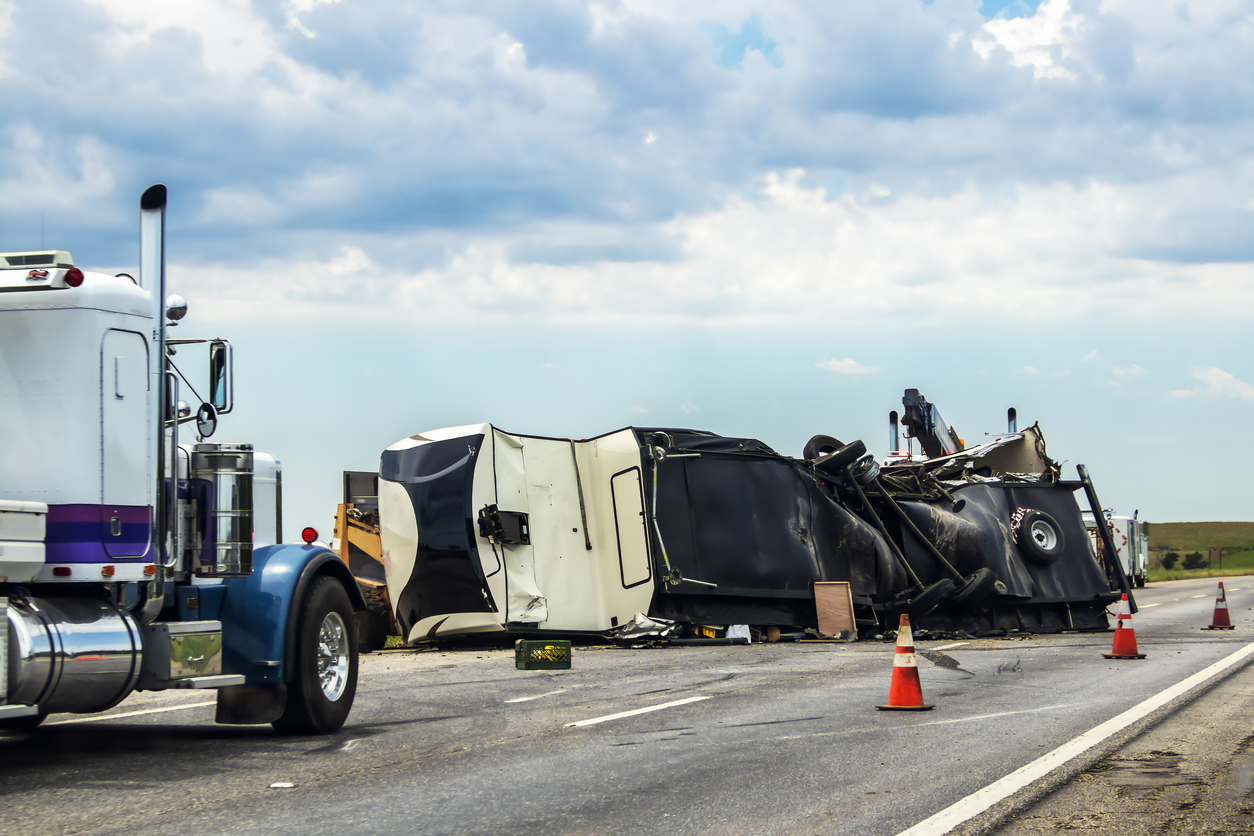
Commercial trucks transport goods across North Carolina every day. Although these vehicles are essential to the economy, their enormous size and weight make speeding particularly dangerous.
Commercial trucks can generally travel at posted highway speeds of up to 70 mph in North Carolina. However, the safest speed may be considerably lower depending on traffic, weather, road conditions, and the truck’s cargo.
Truck drivers must adjust their speed to avoid endangering other motorists. This is true even when traveling below the posted speed limit.
What Is the Speed Limit for Commercial Trucks in North Carolina?
Under North Carolina law, the default speed limit outside municipal limits is 55 mph, unless another limit applies. On designated interstate highways and controlled-access roads, posted speed limits may reach 70 mph.
North Carolina generally does not establish a separate, lower highway speed limit for commercial trucks. However, special permits, temporary restrictions, and roadway conditions may require reduced speeds.
Most importantly, state law prohibits driving faster than is reasonable and prudent under the conditions.
For instance, a truck traveling 65 mph in heavy rain may be operating at an unsafe speed, even when the speed limit is 70 mph.
Why Is Speeding Dangerous for Commercial Trucks?
Fully loaded tractor-trailers can weigh up to 80,000 pounds. Their size and weight make them more difficult to stop and maneuver than passenger vehicles. As speed increases, truck drivers have less time to respond to unexpected hazards.
Speeding also increases the distance required to stop. This makes rear-end collisions more likely when traffic suddenly slows.
Other dangers associated with excessive truck speeds include:
- Jackknife accidents: Sudden braking may cause a trailer to swing toward the truck’s cab.
- Rollover accidents: Taking curves too quickly can cause a truck to overturn.
- Rear-end collisions: Heavy trucks may be unable to stop before striking slower vehicles.
- Loss-of-control accidents: Speeding can make it harder to respond to sharp turns, obstacles, and uneven pavement.
- Cargo-related accidents: Improperly secured cargo may shift during sudden maneuvers.
Because commercial trucks are larger than passenger vehicles, these truck accidents can cause catastrophic injuries.
Do Federal Regulations Require Trucks To Slow Down?
Yes. Commercial truck drivers must comply with applicable Federal Motor Carrier Safety Regulations. Under these rules, drivers must exercise extreme caution when hazards affect visibility or traction. Hazardous conditions can include rain, snow, ice, fog, smoke, and dust.
Commercial drivers should reduce their speed when hazards are present. If conditions become too dangerous, drivers must stop operating until they can safely continue. For example, a tractor-trailer traveling through heavy fog may need to slow down considerably below the posted speed limit.
Following the speed limit alone does not necessarily satisfy a truck driver’s legal duty to operate safely.
What Factors Determine a Safe Speed for a Commercial Truck?
There is no single speed that is safe for every truck or highway. Commercial drivers must consider several factors before determining how fast they can safely travel. These factors include the truck’s weight, cargo distribution, braking capability, tire condition, roadway curves, visibility, and surrounding traffic.
Weather is an important consideration. Wet pavement reduces traction. Strong winds can make large trailers more difficult to control. Construction zones and congested highways also require additional caution. A responsible truck driver must continuously evaluate these conditions and adjust their speed accordingly.
Who Is Liable in a Speeding Truck Accident?
When excessive speed contributes to a truck accident, the driver may be liable for resulting injuries. The trucking company may also bear responsibility. This will depend on the company’s relationship with the driver and the circumstances surrounding the collision.
For example, a trucking company could face liability if its negligent practices contributed to unsafe driving. Similarly, the company may share blame if its employee was negligent.
Evidence in a truck accident investigation may include:
- Electronic logging records
- Vehicle data
- Dashcam footage
- Witness statements
- Expert accident reconstruction reports
Injured victims may be entitled to compensation for economic and non-economic damages. These may provide compensation for medical expenses, lost income, pain and suffering, and other recoverable damages.
Contact Bello Law Firm, PLLC To Schedule a Free Consultation With a Raleigh Truck Accident Attorney
Speeding truck accidents in North Carolina can cause devastating injuries and significant financial losses. If a negligent truck driver caused your collision, you may have grounds to pursue compensation.
If you’ve been injured in Raleigh, NC, please call Bello Law Firm, PLLC for a free case evaluation with a truck accident lawyer or contact us online.
We proudly serve in North Carolina.
Bello Law Firm, PLLC – Raleigh Office
530 Hillsborough St Suite 200, Raleigh, NC 27603
(919) 884-0031